|
|
News & Reviews Article
| Title |
Synopsis of �Shark Reef� |
| Author |
Tim Hayes
|
| Last Updated |
2014-12-13
|
| Abstract |
|
|
|
Synopsis of �Shark Reef� by Tim Hayes
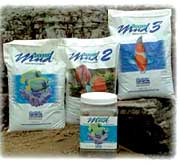
The Zoo Svaty Kopecek in Olomouc of the Czech Replubic is the home of one amazing aquarium: a shark reef. Even more remarkable than a shark reef? The fact that the entire system is filtered with the EcoSystem Method, using Miracle Mud, uv sterilization, zeolite, carbon, and EcoSystem�s Ecophos. No protein skimmer is in place and no ozone system is used. The 8,800 gallon aquarium replaced a 3,525 gallon shark tank in June 2003. Just like the tank it replaced, the new aquarium is an irregular shape, allowing the sharks plenty of room for swimming a figure eight pattern. The inhabitants include surgeons, wrasses, angels, rabbitfishes, Tridacna clams, anemones, soft corals, and a few stony corals along with a pair of Blacktip reef sharks and one Whitetip reef shark.
These sharks are true reef inhabitants, both species being widespread in the Indo Pacific region spending their lives feeding on various reef fishes and cephalopods. The goal of this 8,800 gallon aquarium is to eventually breed the six feet long Blacktip sharks. To date, the sharks are in superb condition, eating well and with none of the visible skin defects often seen with captive sharks. While the other fish in the tank are fed often, the sharks only eat twice a week. Surface skimming is incorporated to combat the problem of oils being released from the shark food, which can cut down on light penetration and interfere with proper gas exchange.
Rather than relying on a single filter, the aquarium is run off of two parallel filter systems. This provides many advantages, such as having backup in case of a system failure and allowing for alternating shut down for routine cleaning. A fifteen percent (1,320 gallon) water change is performed once a month with reverse osmosis water. With this water change and the Miracle Mud in both of the EcoSystem filters, there is no need for supplement dosing aside from the vitamin additions for the shark food.
 As amazing as this setup sounds, most sharks are not recommended for even the advanced aquarist. Unless you have the resources to provide the facilities equivalent to that of a public aquarium, it is irresponsible to take on the care of one of these amazing creatures. Every year, public aquaria around the world have to inform callers that they cannot take in the fish that have outgrown the callers� tanks. As with any livestock purchase, it is best to consider the long-term needs of the animal well before it makes it to your tank at home.

|
|
| Products related to this article |
|
|
|
|
| EC8577 |
|
|
|
|
|
|
|
|
|
|
|
|
|
|
|
|
|
|