A Challenging Group of Fish: The Pipefish � Good & Bad
by Chris Deer
|
| One of the biggest mistake aquarists make is purchasing an animal for their aquarium before they are aware of what kind of care the animal will require to survive. This is often the case with seahorses and pipefish. While most seahorses available in the hobby today are tank bred and will accept a mixture of frozen foods, pipefish are still collected from the wild and have no idea what to do with food that is not live (frozen or freeze-dried). |
| Regardless of the pipefish species you choose to buy, you must first consider whether your aquarium will support one of these delicate animals. The common banded pipefish is offered by many retailers yet this pipefish nearly always dies within 4-6 weeks of being added to the aquarium. Why? Banded pipefish almost never accept any food choice unless it is live and then it must be a tiny size live food choice that is |
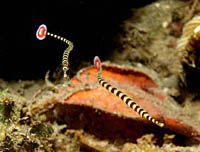
Common Banded Pipefish -
Doryrhamphus Dactylophorus |
offered 2-3 times per day.
Pipefish must be housed in an aquarium with established live rock, low current and with fish that will not out-compete them for food. The best tankmates for pipefish would be seahorses and tiny gobies like Priolepsis species, Clown Gobies and perhaps Trimma Goby species. Most other fish are just too competitive at dinner time and will eventually starve out your pipefish and seahorses. |
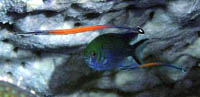
Janssi Pipefish �Doryrhamphus Janssi |
There are over 200 species of pipefish, most being marine species, some being brackish species and even a few species found in freshwater. Like seahorses, the males carry the eggs in a pouch- like area near the tail. After the eggs hatch, the fry are released and there is no |
parental care from that point forward. Due to the tiny mouths of pipefish, tiny food items are preferred like live brine shrimp nauplii (not a complete diet), tiny amphipods and copepods. A good home for a pipefish would be in an established refugium filled with seagrasses and macroalgae.
We have found only one species of pipefish that seems to easily adapt to prepared foods like frozen mysis shrimp, Cyclops, reef plankton and similar frozen foods. This species is the Janss� Pipefish (Doryrhamphus janssi). This is not an easy pipefish species to obtain but they are worth the wait. The Janss� pipefish is a nocturnal species meaning they are out feeding once the lights in the aquarium are off. This is also when you should offer them food. You should be able to actively see your pipefish eat BEFORE you take it home. After some research, it appears best if only one species of pipefish is housed per aquarium. Some species can become territorial and may intimidate another species to the point where it may not come out to feed and starve to death. |
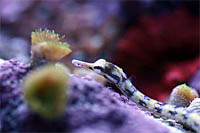
Dragonface Pipefish �
Corythoichthys Haematopterus |
Regardless of which pipefish species you choose, remember that none of them are considered hardy unless you are willing to meet the nutritional requirements needed for these animals to survive. Be smart and choose a species with a good record for captive survival. If consumers continue to purchase species that die in captivity, collectors will continue to import them into our hobby. |
| We should mention the Asian freshwater pipefish here for you freshwater hobbyists. We have brought these in to the store several times in the last couple of years. Each time, we have had ZERO success with getting them to eat anything but live newborn guppies and a few other tiny live foods. We have even tried tiny grass shrimp, live mosquito larvae and even live blackworms. Though |
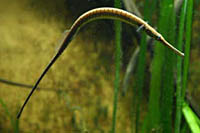
Freshwater Pipefish �Doryichthys Boaja |
| the freshwater pipefish have taken some of these food choices, it has never been enough to sustain their health. For this reason, we will no longer stock this species of pipefish. Perhaps, like seahorses, tank bred pipefish will one day be available to our hobby. Until that time, we suggest only dedicated hobbyists take on the responsibility of keeping the delicate pipefish in captivity. There are many other incredible marine and freshwater fish to choose from that have a much better record for captive survival. |
|